Why Methylated B Complex Matters for Brain Health Detox and MTHFR Support
Some supplements look helpful on the label, but the body still has to convert them into forms it can actually use. That conversion step matters, especially with B vitamins.
B complex vitamins help run daily chemistry that affects focus, mood, energy, pregnancy nutrition, and detox pathways. The catch is that not every form of a B vitamin works the same way for every person. Genetics, digestion, nutrient status, medications, and stress can all affect how well someone activates and uses those nutrients.
That is why methylated B complex has become such an important topic. It gives the body forms of certain B vitamins that are already closer to the active state, which may be especially helpful for people with MTHFR gene variants or those who want targeted support for brain and detox health.
This article is for education only and does not replace medical advice. Anyone who is pregnant, taking medication, managing a medical condition, or giving supplements to a child should work with a qualified healthcare professional.

Methylation helps the body keep essential systems running
Methylation is a normal process that happens constantly in the body. In simple terms, it moves a small chemical group called a methyl group, made of one carbon and three hydrogen atoms, from one molecule to another.
That tiny transfer supports a long list of major functions, including:
Making and balancing neurotransmitters involved in mood, attention, and calm
Supporting DNA repair and healthy gene expression
Helping process homocysteine, an amino acid linked to cardiovascular and neurological health
Supporting liver detox pathways
Helping create phospholipids used in cell membranes
Supporting energy production at the cellular level
Methylation is not some trendy extra feature. It is basic human biochemistry.
B vitamins play a central role in this process. Folate, B12, B6, and riboflavin help move methylation forward. When the body does not have enough of the right forms, the pathway can slow down. That may affect how well the body supports focus, resilience, detoxification, and normal energy.
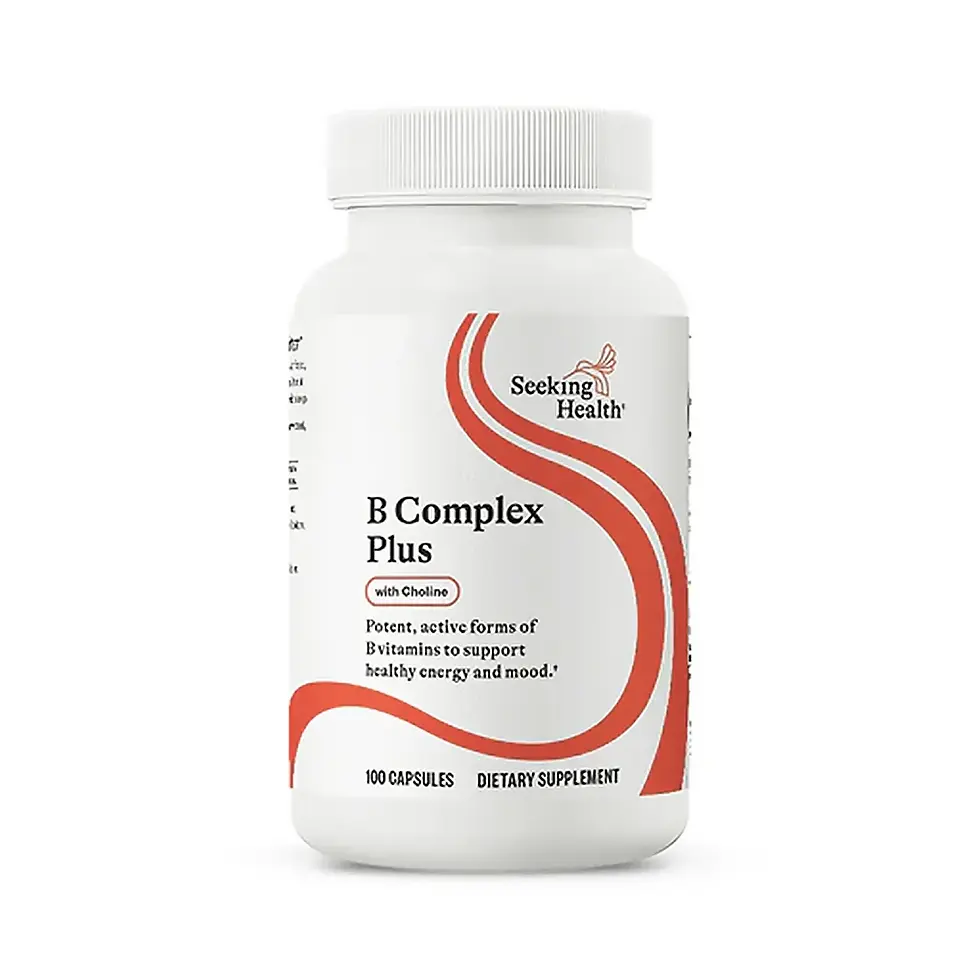
This is where a methylated B complex can make sense. It supplies B vitamins in forms that are commonly used in methylation pathways, such as methylfolate and methylcobalamin, rather than relying only on synthetic or less active forms that require more conversion.
Some people struggle to activate standard B vitamins
A supplement is only useful if the body can break it down, absorb it, convert it, and deliver it where it needs to go. Some people handle that process easily. Others do not.
Reasons can include:
Genetic differences that affect nutrient conversion
Low stomach acid or digestive challenges
Poor diet quality or low protein intake
High alcohol intake
Certain medications that affect B vitamin status
Pregnancy, which raises nutrient demands
Chronic stress, which can increase the need for B vitamins
Gut issues that affect absorption
One of the best-known genetic factors is the MTHFR gene.
MTHFR stands for methylenetetrahydrofolate reductase. This gene helps make an enzyme that converts folate into 5-MTHF, the active methylated form of folate used in the methylation cycle.
Common MTHFR variants, such as C677T and A1298C, may reduce how efficiently this enzyme works. Not everyone with an MTHFR variant has symptoms or nutrient problems, and the effect can vary widely. Still, for some people, these variants can make it harder to convert folic acid or other folate forms into active methylfolate.
That matters because folate does not work in isolation. It works alongside B12, B6, riboflavin, magnesium, choline, and other nutrients. A bottleneck in one part of the pathway can affect the flow of the whole system.
For people who know they have an MTHFR variant, or who have been advised by a practitioner to support methylation, choosing active forms can be a practical step.

B complex vitamins support brain health and detox pathways
B vitamins are water-soluble, which means the body does not store most of them in large amounts. They need regular replenishment through food, and sometimes through supplementation when more support is needed.
For brain health, B vitamins help with neurotransmitter production, nerve function, and energy metabolism. The brain uses a lot of energy, and B vitamins help convert food into the cellular fuel needed to think, learn, focus, and regulate mood.
Several B vitamins stand out:
B vitamin | Why it matters |
B1 thiamine | Supports energy metabolism and nervous system function |
B2 riboflavin | Helps activate other B vitamins and supports antioxidant pathways |
B3 niacin | Supports cellular energy and DNA repair processes |
B5 pantothenic acid | Helps make coenzyme A, used in energy and hormone pathways |
B6 pyridoxal-5-phosphate | Supports neurotransmitters such as serotonin, dopamine, and GABA |
B9 folate | Supports methylation, DNA synthesis, pregnancy nutrition, and brain development |
B12 cobalamin | Supports nerves, methylation, red blood cell formation, and brain function |
B vitamins also support detox pathways. Detoxification is not a quick cleanse. It is the ongoing work of the liver, kidneys, gut, lymphatic system, lungs, and skin. The liver uses nutrient-dependent steps to transform and package compounds so the body can remove them.
Methylation is one of those pathways. Others rely on B vitamins too, including pathways linked to glutathione activity, amino acid metabolism, and cellular repair.
This is why people often focus on B complex vitamins when they want support for brain health, detox pathways, and MTHFR support. The goal is not to force detox. The goal is to nourish the normal systems that already do this work every day.
Methylated B12 and cyanocobalamin are not the same
Vitamin B12 comes in several forms. Two of the most common are methylcobalamin and cyanocobalamin.
Methylcobalamin is a methylated form of B12. It participates directly in methylation and supports the conversion of homocysteine to methionine. It is often chosen in methylated B complex formulas because it is already in a biologically active form.
Cyanocobalamin is a synthetic form of B12 that contains a cyano group. The cyano group includes cyanide. The amount of cyanide released from normal supplemental doses is generally considered very small, far below toxic exposure levels for most people. Still, the body must remove that cyano group and convert the B12 into active forms before it can use it.
That difference matters for people who want a form that requires fewer conversion steps.
Form of B12 | What it means |
Methylcobalamin | Active methylated B12 used in methylation pathways |
Adenosylcobalamin | Active B12 form used in mitochondria for energy metabolism |
Hydroxocobalamin | Natural form often used clinically and convertible to active forms |
Cyanocobalamin | Synthetic B12 form with a cyano group that must be converted |
Cyanocobalamin is common because it is stable and inexpensive. It can work well for many people. Methylcobalamin may be a better fit for those looking for active B12 support, especially when combined with methylfolate in a well-designed B complex.
Folate and folic acid work differently in the body
Folate and folic acid are often treated as if they are the same thing, but they are not identical.
Folate is the natural family of vitamin B9 compounds found in foods such as leafy greens, asparagus, lentils, avocado, and liver. The active methylated form used by the body is 5-MTHF, also called methylfolate.
Folic acid is the synthetic form of vitamin B9 used in many fortified foods and standard supplements. It must be converted through several steps before the body can use it as active folate.
For many people, that conversion works well enough. For others, especially those with reduced MTHFR enzyme activity, the conversion may be less efficient. When intake of folic acid is high and conversion is slow, unmetabolized folic acid may build up in the blood.
There is also concern that folic acid can compete with natural folates at folate receptors or transport systems. In simple terms, too much folic acid may get in the way of folate doing its job in certain situations. Research is still developing, but this is one reason many methylated formulas use methylfolate instead of folic acid.
This distinction is especially important during pregnancy.
Folate supports neural tube development, DNA synthesis, placental function, and healthy growth. Public health guidance has long encouraged folic acid intake before and during early pregnancy because it helps reduce the risk of neural tube defects. At the same time, many practitioners now look at methylfolate as an option for people who may not convert folic acid efficiently.
Pregnancy is not the time to guess. A prenatal plan should be guided by an obstetrician, midwife, or qualified practitioner. Still, the form of folate deserves attention, not just the amount.
Who may benefit from a methylated B complex
A methylated B complex is not only for people with known MTHFR variants. It may be useful for anyone who needs extra support for nutrient conversion, brain health, or methylation.
People often look for this type of formula when they are:
Pregnant or preparing for pregnancy
Following a prenatal plan that includes active folate
Supporting focus, learning, or mood balance
Looking for detox pathway support
Managing high stress or low energy
Following a restricted diet
Working with a practitioner after genetic testing
Seeking support for children or adults with ADHD or Autism
For ADHD and Autism, the goal is support, not treatment or cure. Neurodivergent people can have different nutritional needs, food preferences, digestive patterns, and sensitivities. Some may benefit from targeted nutrient support, while others may not tolerate certain supplements well.
B vitamins play a role in neurotransmitter production, methylation, and nervous system function, so they are often part of broader nutritional discussions around focus, regulation, and brain support. Any supplement plan for children, pregnant people, or individuals with complex needs should be personalized.
A quality B complex should also be balanced. More is not always better. Very high doses of certain B vitamins, especially B6, may cause side effects if used improperly over time. Sensitive individuals may also feel overstimulated by methylated vitamins if the dose is too high.
A thoughtful formula should include active forms where they matter most and doses that make sense for regular use.
Look for features such as:
Methylfolate instead of folic acid
Methylcobalamin or active B12 forms instead of only cyanocobalamin
P5P, the active form of B6
Riboflavin or riboflavin-5-phosphate for MTHFR enzyme support
Clear labeling with no hidden proprietary blends
Third-party testing when available
Doses that fit the intended use

The takeaway on methylated B complex
B vitamins are small nutrients with a big job. They help the body make energy, build neurotransmitters, support detox pathways, maintain healthy nerves, and run methylation chemistry that affects many systems.
The form matters. Methylfolate is not the same as folic acid. Methylcobalamin is not the same as cyanocobalamin. For people with MTHFR variants, increased nutrient needs, pregnancy considerations, or brain health goals, those differences can be meaningful.
A methylated B complex can offer a more ready-to-use approach by providing active forms that support the body’s natural pathways. It is not a magic fix, and it should not replace medical care, a nutrient-rich diet, sleep, hydration, or stress support. But as part of a thoughtful wellness plan, it can be a smart foundation.
The best next step is simple: check the forms on the label, choose active B vitamins when appropriate, and work with a knowledgeable practitioner if pregnancy, medications, ADHD, Autism, or known MTHFR variants are part of the picture.


Comments